
Cell Press CellPress

Material Science
March 2, 2022 — A collaborative research team led by Professor Hu Zhiyu and Professor Li Tao from Shanghai Jiao Tong University in China, together with Professor Kasper Moth-Poulsen from Chalmers University of Technology in Sweden, published a new study in Cell Press’s journal Cell Reports Physical Science, titled “Chip-scale solar thermal electrical power generation.”
The team proposed a sustainable energy solution, achieving for the first time the conversion of molecular solar energy into thermal energy storage and release, subsequently transforming it into electrical power. They successfully developed a novel microelectromechanical ultrathin thermoelectric chip for converting low-grade heat into electricity.
Research Highlights
The collaborative team from Shanghai Jiao Tong University and Chalmers University of Technology proposed a sustainable energy solution combining MOST (Molecular Solar Thermal Energy Storage) and MEMS-TEG (Micro-Electro-Mechanical Systems Thermoelectric Generator) technology. This integrated solar energy storage and power generation approach enables the safe and efficient storage of solar energy (such as storing summer or daytime solar energy) while also allowing the MOST materials containing stored solar energy to be transported to locations where heat and electricity are needed on demand (such as during winter or at night). The research team demonstrated a laboratory-scale experiment in which MOST material (norbornadiene) containing solar energy stored in Gothenburg, Sweden, was transported several months later to Shanghai, China, and successfully utilized with MEMS-TEG chips for on-demand heat release and power generation.
Key Achievements
This experiment achieved, for the first time, the conversion of molecular solar energy into thermal energy storage and release, followed by conversion into electrical power.
Successfully produced a novel microelectromechanical ultrathin thermoelectric chip for converting low-grade heat into electricity.
Achieved continuous electrical power output from microscale array-integrated thermoelectric devices for the first time.
Background
As the global population continues to grow, energy demand is increasing. However, traditional energy sources such as coal, oil, and natural gas are gradually being depleted while causing significant harm to the human environment. The development of new, environmentally friendly, and sustainable energy sources has become an urgent priority. The sun, as an inexhaustible energy source, has been a focal point of scientific research in recent years. Among various research directions, the concept of storing light energy in chemical bonds for later use is particularly innovative.
The Molecular Solar Thermal Energy Storage (MOST) system represents a novel energy storage concept that leverages the ability of photoswitchable molecules to absorb light and undergo isomerization reactions to form high-energy isomers, thereby converting light energy into chemical bond energy for storage. When energy is needed, the stored energy is released as heat through the use of catalysts or other methods. By utilizing thermoelectric chips, the released thermal energy can be converted into electrical power. This approach gives rise to a novel type of organic solar cell that is not constrained by time or location.
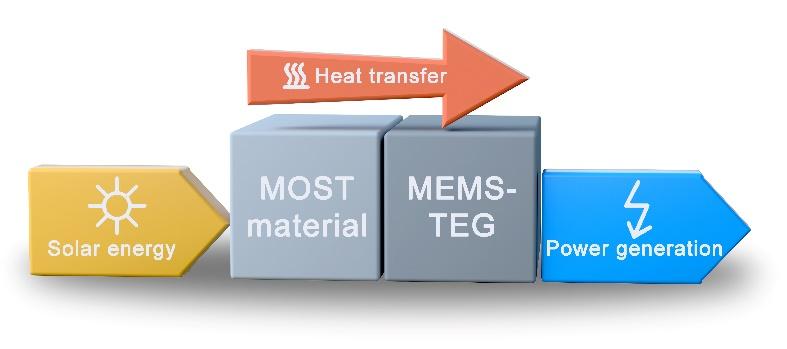
Figure 1. Schematic Diagram of MOST and MEMS-TEG Power Generation Concept
High-Efficiency Molecular Solar Thermal Energy Storage (MOST)
Liquid-State MOST
The team led by Professor Kasper Moth-Poulsen and Dr. Wang Zhihang at Chalmers University of Technology in Sweden utilized norbornadiene (NBD), based on the [2+2] cycloaddition reaction mechanism, as the base molecule. By introducing donor-acceptor groups, they successfully redshifted the absorption spectrum into the near-visible light range. The quantum conversion yield was measured at up to 68% in toluene, with a storage enthalpy of ΔHstorage = 93 kJ mol⁻¹.
Solid-State MOST
The team led by Professor Li Tao and Dr. Zhang Zhaoyang at Shanghai Jiao Tong University in China functionalized cis-trans isomeric pyrazole azobenzene (AZO) to successfully incorporate phase change energy storage into the storage enthalpy. The measured final ΔHstorage = ΔHisom + ΔHphase change = 102 kJ mol⁻¹.
Heat Release Experiments
In heat release experiments using a cobalt phthalocyanine catalyst, the norbornadiene derivative in a 0.78 M toluene solution achieved a measured absolute temperature difference of 13°C. Meanwhile, the pyrazole azobenzene molecular derivative achieved an absolute temperature difference of 17°C through photoinduced release.
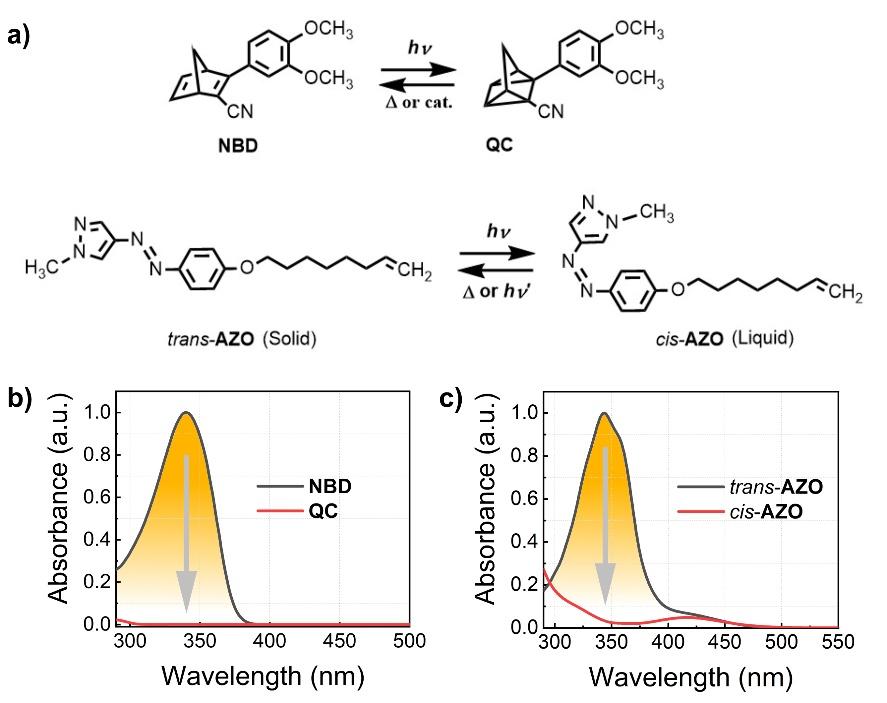
Figure 2. Structures and Absorption Spectra of the Two MOST Compounds Used in This Work
(a) Molecular structures of the NBD and AZO photoswitch pairs. The reverse conversion from QC to NBD can be facilitated via thermal (Δ) or catalytic (cat.) routes. The reverse conversion from cis- to trans-AZO can be achieved through thermal or photoinduced methods.
(b) Absorption spectra of NBD before and after irradiation with 340 nm light (in toluene).
(c) Absorption spectra of the AZO photoswitch before and after irradiation with 365 nm light (in acetonitrile).
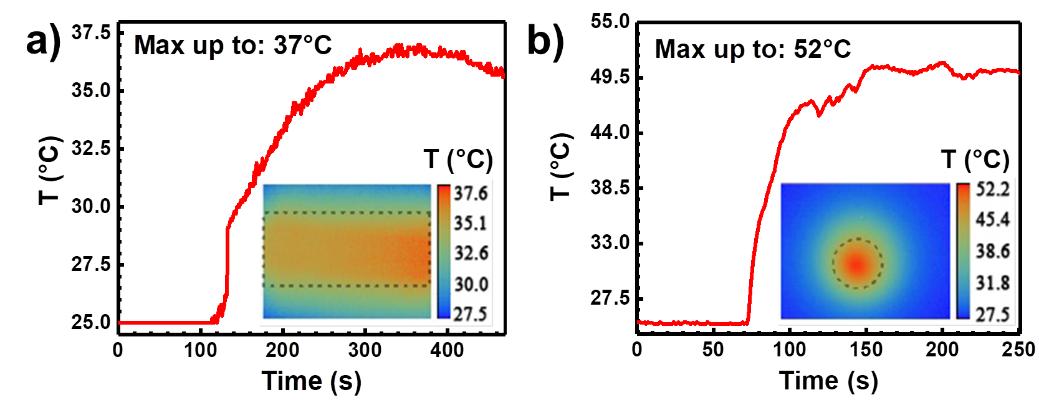
Figure 3. Macroscopic Heat Release Performance of NBD and AZO Captured by Infrared Thermal Imaging
(a) Heat release test of the NBD system after energy storage.
(b) Heat release test of the AZO system after energy storage.
Micro-Electro-Mechanical Systems Thermoelectric Generator (MEMS-TEG) Capable of Generating Electricity from Minimal Temperature Differences
To efficiently convert the released heat into electrical power, the team led by Professor Hu Zhiyu and Dr. Wu Zhenhua at Shanghai Jiao Tong University in China designed and fabricated a highly efficient, sensitive, high-integration, large-array Micro-Electro-Mechanical Systems Thermoelectric Generator (MEMS-TEG) chip. The MEMS power generation chip can effectively generate electricity under very small temperature differences (<0.001°C) where conventional mechanical heat engines cannot operate. The chip-based power generation system contains no moving parts, offering advantages such as noise-free operation, long service life, modular scalability, and low-cost mass production.
This international collaborative team demonstrated the use of low-grade heat released from two types of MOST materials to establish a temperature difference across a 1-micrometer-thick thermoelectric device and convert it into electrical power. Through simple prototype experiments, the norbornadiene derivative ultimately achieved a power output of up to 0.1 nW, while the pyrazole azobenzene derivative achieved 0.06 nW.
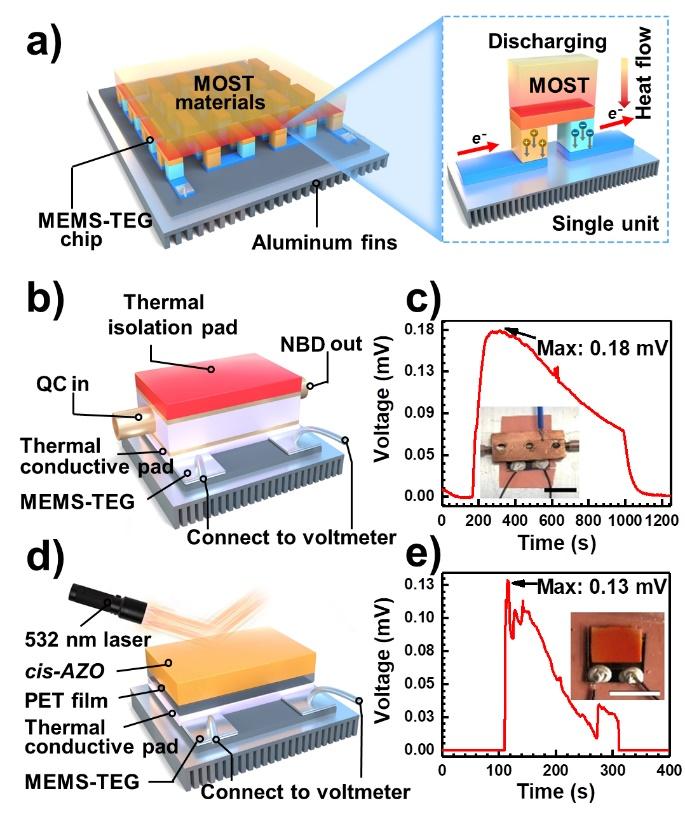
Figure 4. Power Generation Performance of MOST Systems
(a) Schematic diagram of MOST-based power generation.
(b) Experimental setup for solar energy storage and power generation using NBD.
(c) Heat release monitoring over time via voltage generation measured by thermocouple and MEMS-TEG chip.
(d) Schematic experimental setup for solar power generation based on AZO thin film.
(e) Net voltage generated by MEMS-TEG chip over time.
This study represents the first experimental validation of integrating two types of MOST molecules into thermoelectric devices for solar energy storage and power generation. This innovative combination of chemical materials and power generation chips enables efficient conversion of the solar spectrum into chemical energy, with stored solar energy subsequently released as heat on demand to generate electricity. This green energy technology creates a novel approach to harnessing solar energy, converting sunlight into electrical power that is not constrained by time, location, or geography.
In this study, the Swedish team first stored solar energy from Gothenburg in the MOST material norbornadiene. Several months later, using this material containing solar energy stored in Sweden, they successfully demonstrated on-demand heat release and power generation in Shanghai, China.
Outlook
Developing renewable energy technologies is a key priority in achieving carbon neutrality and building a sustainable energy society. As solar energy availability on the ground is significantly influenced by geographic location, time, and climate conditions — often resulting in intermittent and unstable supply — overcoming the limitations of solar energy utilization under natural conditions presents a considerable challenge. The integrated MOST and MEMS-TEG solar energy storage and power generation technology offers a solution that enables both safe and efficient storage of solar energy (such as storing summer or daytime solar energy) and the transportation of MOST materials containing stored solar energy to locations where heat and electricity are needed on demand (such as during winter or at night).
In the future, with further breakthroughs in energy efficiency and large-scale production, this technology holds promise for widespread application in regions with limited access to fossil fuel resources.

Related Paper Information
The original paper was published in Cell Reports Physical Science, a journal of Cell Press.
Paper Title:
Chip-scale solar thermal electrical power generation
https://www.cell.com/cell-reports-physical-science/fulltext/S2666-3864(22)00056-X#%20
