
Nanjing University Research Team Proposes New Concept of Faraday Layer and Junction for Direct Solar Energy Conversion and Storage, a World First
Farador is an electron-ion coupled transport conductor. The contact between a semiconductor and a Farador forms a Faraday junction (Figure 1). In conventional semiconductor junctions, charge carriers are electrons, and interfacial charge transfer does not induce chemical changes. In contrast, charge carriers in a Faraday junction are coupled electrons and ions, and interfacial charge transfer leads to chemical changes. Faraday junctions can be applied in various solar energy conversion and storage devices.
Currently, the understanding of interfacial charge transport mechanisms in Faraday junctions is built upon the band theory of semiconductor junctions. However, classical band theory fails to explain the unique interfacial charge transport behavior observed in these junctions. Therefore, elucidating the interfacial charge transport mechanism of Faraday junctions is of great significance for establishing new theories of semiconductor surfaces and interfaces, as well as for developing novel devices for solar energy conversion.
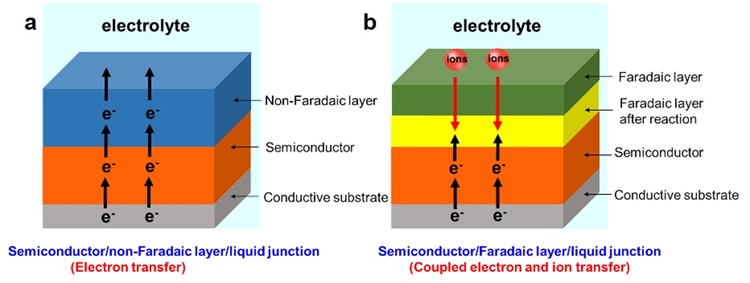
Figure 1. Schematic Diagram of Interfacial Charge Transport in Different Semiconductor Junctions
(a) Conventional semiconductor junction
(b) Faraday junction(iScience 2020, 23, 100949, https://www.cell.com/iscience/fulltext/S2589-0042(20)30133-4 )
Recently, the research team of Associate Professor Luo Wenjun and Academician Zou Zhigang from the National Laboratory of Solid State Microstructures, the College of Engineering and Applied Sciences, and the School of Physics at Nanjing University investigated the interfacial charge transport mechanism using a semiconductor/Ni(OH)₂ heterojunction as a model. They discovered new characteristics, including reversible interfacial charge transport behavior and the dependence of the Farador redox potential window on semiconductor band positions — properties that are entirely different from the interfacial charge transport behavior observed in conventional semiconductor junctions. Based on these findings, the team proposed the novel concept of the Faraday junction for the first time internationally.
To further deepen the understanding of Faraday junctions, the team studied the interfacial charge transport behavior at semiconductor/electrolyte interfaces (Chem. Sci. 2020, *11*, 6297, https://doi.org/10.1039/d0sc01052a). By varying the hydroxyl group content on the semiconductor surface and investigating its effect on photoelectrochemical performance, they discovered that the surface hydroxyl layer acts as a charge transport mediator at the solid–liquid interface. Increasing the surface hydroxyl content improved interfacial charge collection efficiency while also accelerating the catalytic reaction rate. Thus, the semiconductor surface hydroxyl layer plays the same role as extrinsic Faraday layers such as Ni(OH)₂ (Figure 2). Based on this, the team proposed the new concept of the intrinsic Faraday layer, suggesting that the semiconductor/electrolyte junction can also be considered an intrinsic Faraday junction.
In addition to conducting mechanistic research on semiconductor surfaces and interfaces, the team has also focused on the construction of full Faraday devices (Angew. Chem. Int. Ed. 2020, https://doi.org/10.1002/anie.202011930; Chinese Invention Patent, Application No.: 2020110398345). The team developed a Si/WO₃ capacitive Faraday junction, discovering a new characteristic: the photoinduced interfacial barrier height can be continuously tuned. They constructed a two-port full device and achieved, for the first time, unbiased solar charging and dark discharge — enabling direct solar energy conversion and storage (Figure 3).。
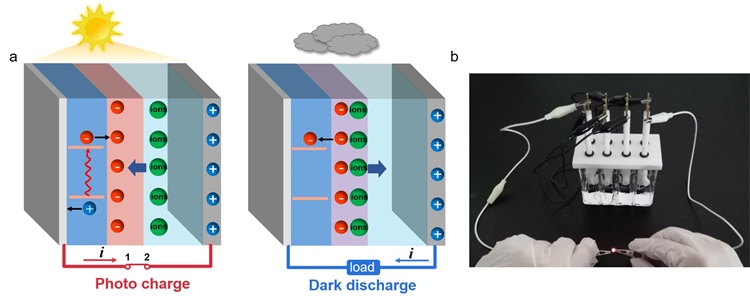
Figure 3. Capacitive Faraday Junction Full Device
(a) Schematic diagram of the device structure
(b) Photograph of the actual device。
This series of research achievements was supported by the National Key Research and Development Program of China (Key International Science and Technology Innovation Cooperation Project) and the National Natural Science Foundation of China, conducted in collaboration with Professor Sun Gengzhi from Nanjing Tech University, Professor Zhao Zongyan from Kunming University of Science and Technology, Professor Wu Xinglong from Nanjing University, and Associate Professor Yao Yingfang from Nanjing University. The lead authors are Chen Xiangtian, Yin Ziyu (master's students, class of 2017, School of Physics, Nanjing University), and Wang Pin (doctoral student, class of 2017). Associate Professor Luo Wenjun proposed the original concepts, and the research was conducted under the guidance and support of Academician Zou Zhigang.
From conceptual innovation, theoretical research, and materials design to prototype device construction, this research ultimately achieved direct solar energy conversion and storage — a scientific and technological innovation from "0" to "1." The introduction of these new concepts is expected to significantly impact fields such as solid-state surfaces and interfaces, photochemistry, electrochemistry, and solar cells, representing an interdisciplinary integration of chemistry, physics, materials science, electronics, and energy, with the potential to establish new research directions.
Building on these achievements, the research team led by Associate Professor Luo Wenjun and Academician Zou Zhigang has taken the lead internationally in establishing a research group dedicated to Farador materials and devices, continuing to advance this field and maintain a leading position on the global stage.
